WORKPLACE SAFETY
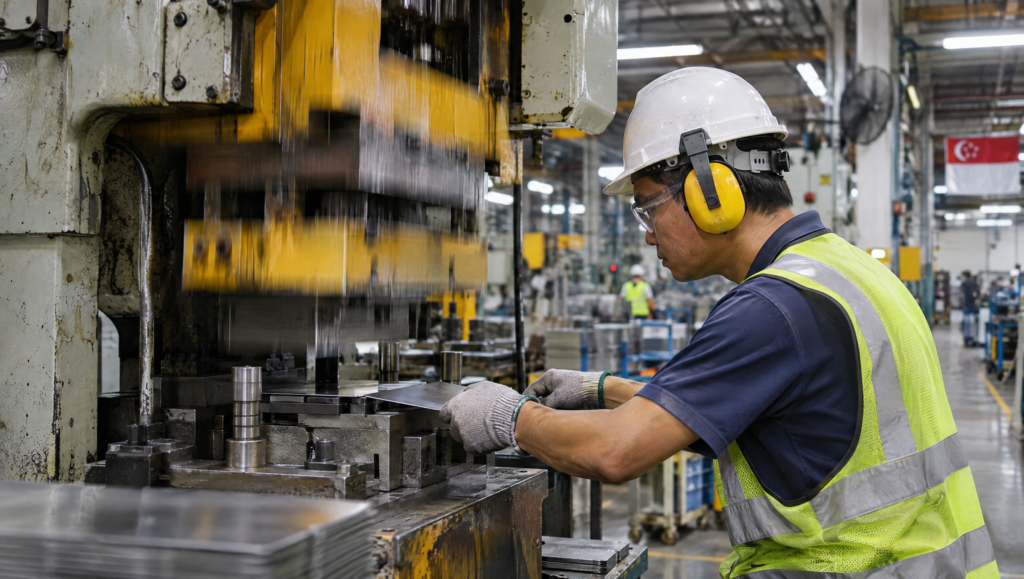
Singapore’s latest Workplace Safety and Health Report shows occupational disease cases climbing faster than workplace accidents — and noise-induced hearing loss alone now accounts for well over half of them. The physical injuries get the signage, the inspections and the headlines. The slow, cumulative damage from noise, repetitive strain and chemical exposure gets comparatively little of any of it.
The disease count is rising while the accident count stabilises
MOM’s Workplace Safety and Health Report for January–June 2026 recorded 620 occupational disease cases, up from 485 in the same period of 2025 — a jump of roughly 28%. The Ministry has attributed the rise mainly to expanded disease coverage and stronger detection and reporting, not a decline in underlying workplace conditions. Meanwhile, the headline accident figures told a steadier story: the construction sector’s fatal and major injury rate actually fell to its lowest level since 2020, and the overall major injury rate, excluding platform workers, also improved year-on-year.
Three conditions account for nearly all of it
Within that 620-case total, three conditions dominate. Noise-induced hearing loss made up the largest share — more than half of all cases — followed by work-related musculoskeletal disorders, with occupational skin disease in third place. None of these three show up in a site walkthrough the way a missing fire extinguisher or an unguarded edge does. They accumulate silently over months or years of exposure, which is exactly why a worksite can under-prioritise them relative to acute hazards.
Singapore’s signage has been built for the hazards you can see
Most SS 508 and ISO 7010 signage budgets go where the risk is visible and immediate: fire points, fall edges, confined spaces, vehicle paths. That’s the right instinct for preventing fatalities, and it shows in the numbers above. But mandatory-action signage for chronic-exposure hazards — hearing protection zones around machinery, PPE requirements near chemical handling, manual-handling warnings near repetitive-task stations — tends to get installed once, if at all, and rarely gets the same review cycle as fire or fall-hazard signage.
What the standards already require
This isn’t a gap in the rules — it’s a gap in follow-through. SS 508’s mandatory action signs, the blue-circle category, already cover hearing protection requirements, and SS 586’s hazard communication and GHS labelling provisions cover the chemical exposure pathways behind much occupational skin disease. The compliance bar for closing this gap is low: it’s signage many Singapore worksites are already required to have, just not consistently re-assessed as machinery, chemical use or task design changes.
A low-cost review before the next report lands
With the Platform Worker Safety Workgroup’s findings due by year-end and MOM’s full-year WSH report following early next year, this is a reasonable window for facilities and EHS teams to re-walk noise-generating areas, chemical handling points and repetitive-task stations — not just the acute-hazard zones already audited. A mandatory hearing-protection sign at every machinery zone above typical noise thresholds, and GHS-compliant hazard labelling at every chemical storage and handling point, are both same-week fixes that directly target the three conditions behind this year’s increase.
Browse our Hearing Protection Must Be Worn signage, or see our full range of SS 508-compliant workplace safety signs in Singapore for mandatory-action and hazard-communication signage.
Author: www.safetysigns.sg Team
Date: 21 November 2026